Most beginners overspend on the wrong things: a big saw before they can mark a straight line, a drawer of chisels before they own a decent tape measure. This guide puts tools in the order that gets you building soonest for the least money.
We have not tested any specific product here. This is a buying order based on what each tool lets you do, not a review.
Step 1: Measure and mark
Bad marks ruin good cuts, so start here.
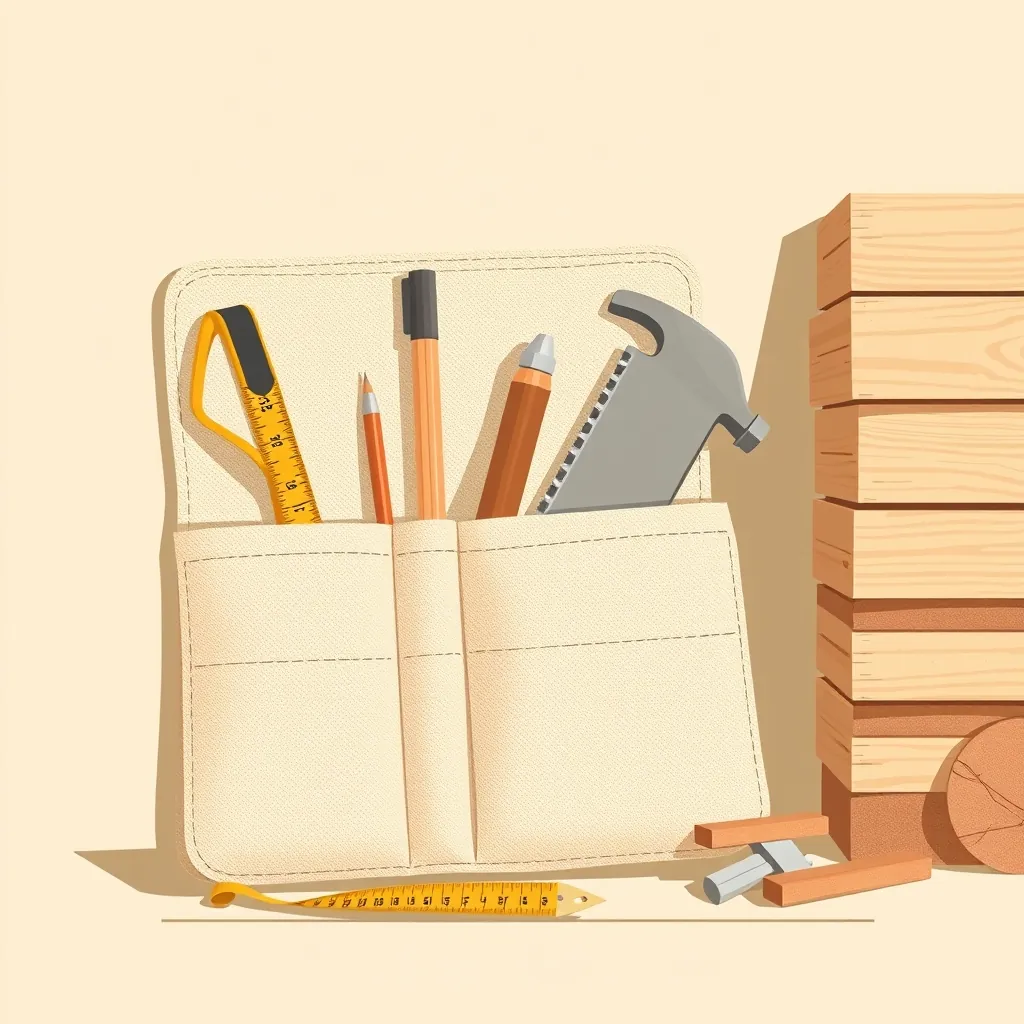
- A tape measure with a clear, easy-to-read blade
- A combination square (or a basic try square) for straight, square lines
- A pencil, plus a marking knife later if you like crisp lines
Spend a little more on the square than on anything else in this step. A square that is not actually square makes every project worse.
Step 2: Cut
You can build a lot with one hand saw before you need a power saw.
- A hand saw that suits your wood: a general-purpose crosscut saw is a reasonable first pick
- A way to hold the work still, which is the next step
Step 3: Hold the work
Clamps are a first-week purchase, not an upgrade.
- Two or three clamps you can open to about the width of a small board
- A flat, stable surface: a sturdy table or a basic workbench with a sacrificial top
An unclamped board is the usual reason for a crooked cut and a slipped saw.
Step 4: Fasten
- A claw hammer and a few nails for rough work
- A screwdriver set, or a cordless drill (see our guide to choosing a first cordless drill)
- Wood glue: for most beginner projects, glue plus clamps is stronger than nails alone
Step 5: Smooth
- Sandpaper in a few grits, or a sanding block
- A small file or rasp for edges
What can wait
- A table saw, router or planer: powerful, but each one adds cost, noise, dust and risk. Learn the basics by hand first.
- Large chisel sets: buy one or two good chisels when a project needs them.
- Fancy storage: a plain shelf and a bucket work.
Safety gear is not optional
Buy safety glasses, hearing protection and a dust mask before your first power tool, not after. Wood dust is an airborne hazard: OSHA describes health effects from skin and breathing problems to a link with cancer. Our shop safety basics guide covers what to wear.
A simple budget rule
Put your money where the tool touches the work every time: the square, the saw and the clamps. Buy the middle option, not the cheapest or the dearest, and upgrade only the tool that is actually slowing you down.
Ready for a first build? Try five easy beginner projects.